
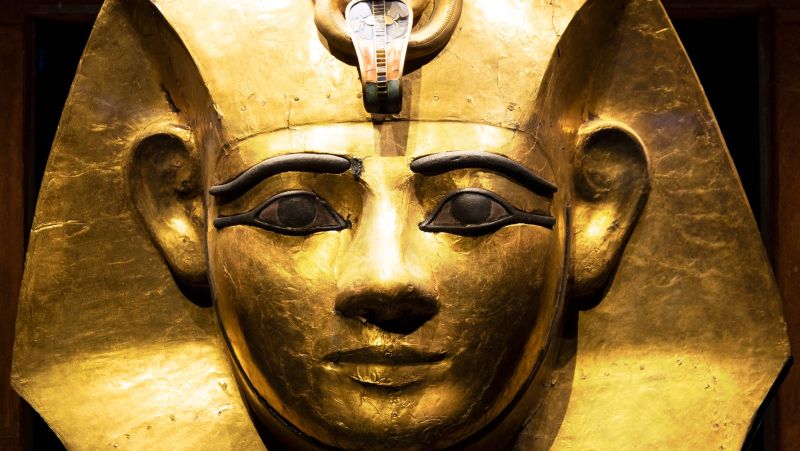
For millennia, Egypt has been a land where sky and stone converse—where architecture is not merely construction, but cosmology carved into the earth. This profound dialogue between human ingenuity and celestial motion finds a new chapter in modern times through a phenomenon that has enchanted both scholars and travelers: the sun alignment on the face of Ramses II at the Grand Egyptian Museum (GEM). Although GEM is a contemporary institution, the alignment echoes ancient Egyptian astronomical brilliance and rekindles humanity’s fascination with how the ancients read the heavens to structure their world.
This blog explores the history, science, meaning, and cultural impact of the sun alignment phenomenon. It also examines how the Grand Egyptian Museum has transformed an ancient cosmic celebration into a modern-day architectural and cultural experience.
1. Egypt: A Civilization of Light and Alignment
Ancient Egypt’s relationship with the sun was not casual; it was central to life, kingship, religion, and architecture. The sun god Ra was believed to sail across the sky during the day and through the underworld at night. Pharaohs, considered sons of the sun deity, assumed divine legitimacy through this cosmic association.
Egyptians meticulously observed celestial cycles—the solstices, equinoxes, heliacal rising of Sirius, and seasonal changes in the path of the sun. These observations shaped temples, tombs, pyramids, and even entire cities. Alignments with sunrise, sunset, and stellar events were intentional, symbolic acts of connecting earth with the eternal heavens.
From the Great Pyramid’s stellar shafts pointing toward Orion and Sirius to the Karnak Temple’s winter solstice sunrise alignment, the landscape of ancient Egypt can be read as an architectural star map.
2. Ramses II: The King Who Commanded the Sun
Few rulers carved their presence into Egyptian history as profoundly as Ramses II, also known as Ramses the Great. His reign (1279–1213 BCE) was marked by monumental construction, military triumphs, and a level of artistic and architectural activity unmatched in the ancient world.
Ramses II understood the power of spectacle. He commissioned temples, colossi, obelisks, and statues that merged royal propaganda with cosmic symbolism. Among the most extraordinary of these achievements was the temple of Abu Simbel, whose sanctuary receives the sun’s rays twice a year—on or near February 22 and October 22. On those mornings, sunlight travels along the temple’s inner axis and illuminates Ramses’ face along with other divine statues, a feat of engineering so precise that even modern architects remain astonished.
This tradition of cosmic alignment is the historical backdrop that enriches the sun alignment phenomenon involving the colossal statue of Ramses II now enthroned at the Grand Egyptian Museum.
3. The Grand Egyptian Museum: A New Gateway to the Ancient World
Located adjacent to the Giza Plateau and overlooking the pyramids, the Grand Egyptian Museum is a monumental project that aims to house more than 100,000 artifacts spanning Egypt’s ancient eras. It is one of the largest archaeological museums in the world and an architectural marvel in its own right.
Among the museum’s most iconic features is its Grand Hall, where a towering 3,200-year-old statue of Ramses II greets visitors. This colossal statue, originally discovered in Mit Rahina (ancient Memphis), stood for decades at Ramses Square in Cairo before being relocated and restored for permanent display at GEM.
The architects of the museum recognized the symbolic potential of this king’s presence—not only as an emblem of ancient Egypt but as a focal point for artistic and cosmic expression. The result is a carefully orchestrated architectural alignment that allows sunlight to illuminate Ramses II’s face on specific days of the year.
4. The Sun Alignment at GEM: A Modern Reinterpretation of an Ancient Phenomenon
Unlike the sun alignment at Abu Simbel—engineered by ancient architects—the alignment at GEM is a modern homage to Egypt’s heritage of cosmic architecture.
How the Alignment Works
The museum’s design takes advantage of the building’s spatial orientation, the fixed position of the Ramses statue in the Grand Hall, and the trajectory of the sun relative to the museum’s façade and skylights. On specific mornings, sunlight pours through the glass architecture and directly strikes the face of the colossal king.
Observers describe the event as a golden beam that gradually touches the statue’s features—first the crown, then the eyes, then the full face—like a cosmic spotlight awakening an ancient soul.
Why It Matters
This moment is not accidental; it is symbolic.
It mirrors the ancient Egyptian tradition of using architecture to:
-
Honor kingship
-
Mark astronomical events
-
Celebrate the connection between pharaohs and divine light
-
Synchronize human activity with cosmic cycles
By intentionally replicating this practice, the Grand Egyptian Museum bridges ancient and modern Egypt, proving that celestial engineering is not a lost science but a living tradition.
5. The Science Behind the Alignment
Any celestial alignment requires precise astronomical and architectural calculations. The phenomenon at GEM involves an interplay of factors:
1. Solar Azimuth and Altitude
The sun’s path changes throughout the year. Architects calculated:
-
the azimuth (sun’s horizontal angle),
-
the altitude (its height above the horizon),
-
and the seasonal angles of light entering the museum’s structure.
2. Skylight Geometry
The museum incorporates large transparent sections that funnel sunlight into the hall. On alignment days, the angle of the sun corresponds exactly with these openings.
3. Statue Orientation
The positioning of Ramses II’s statue is not random. It is oriented to ensure that sunlight strikes its face rather than its body or pedestal.
4. Seasonal Timing
The event does not happen every day. Instead, it occurs on select dates, echoing the tradition of ancient solar festivals. These dates often align with transitional periods in the Egyptian agricultural calendar, similar to the ancient practice of marking key moments with celestial events.
6. Symbolism: When Light Meets Stone
The sun alignment is more than an aesthetic event—it is a symbolic act steeped in layers of meaning:
1. Resurrection and Eternal Life
In Egyptian cosmology, sunlight was associated with rebirth. Every sunrise symbolized renewal. When the sun touches the face of a pharaoh, it is a ritual reenactment of the king’s eternal regeneration.
2. Divine Kingship
Ramses II was considered the earthly manifestation of Ra. The sun’s illumination reinforces this cosmic relationship.
3. Human Achievement in Harmony with Nature
The alignment demonstrates how ancient Egyptians mastered the natural world—not by overpowering it, but by synchronizing architecture with celestial rhythms.
4. Continuity of Civilization
When modern architecture recreates ancient practices, it affirms the enduring legacy of Egyptian civilization. It is as though the past and present momentarily merge in the golden light of the sun.
7. Visitors’ Perspective: Experiencing a Living Miracle
Tourists and Egyptians alike describe the sun alignment at the Grand Egyptian Museum as a breathtaking moment. Standing in the Grand Hall in the early morning, visitors witness the gradual awakening of the colossal figure whose serene expression has endured for over three millennia.
Many note the hush that falls over the hall as the light moves across the statue—a moment of collective awe that feels almost sacred. Cameras click, but the most striking reactions are quiet: admiration, contemplation, pride.
Some visitors feel a direct connection to Egypt’s ancient past, as though they are participating in a timeless ritual experienced by generations long gone.
8. How the Alignment Strengthens Cultural Identity
The sun alignment event has quickly become more than an architectural novelty. It is evolving into a new cultural celebration. Egyptians take pride in seeing ancient sciences revived in a modern building that stands at the gateway to their heritage.
This phenomenon embodies:
-
National identity, honoring a civilization that mastered astronomy.
-
Cultural continuity, linking Ramses II’s ancient legacy with contemporary Egyptian society.
-
Educational value, inspiring new generations to study astronomy, archaeology, architecture, and heritage conservation.
Schools and universities increasingly organize field trips during the event, turning the alignment into a learning opportunity.
9. A Global Attraction: Tourism Reimagined
Egypt’s tourism industry is deeply tied to its ancient monuments, but events like the GEM sun alignment add a new dimension—experiential tourism. Visitors are not only observing antiquities; they are witnessing celestial interactions that animate history.
Much like the winter solstice event at Karnak or the Abu Simbel sun festival, the alignment at GEM is drawing international attention. Travel agencies now offer special tours timed to coincide with the phenomenon. Social media coverage amplifies the experience, making it one of Egypt’s emerging cultural landmarks.
10. The Legacy of Ancient Astronomers in Modern Architecture
The architects of the Grand Egyptian Museum deliberately designed a building that nods to ancient Egyptian aesthetics and engineering:
-
The museum’s façade incorporates triangulated patterns inspired by the pyramids.
-
Interior spaces evoke the grandeur of ancient temples.
-
Natural light is used as a design element, much like in ancient sanctuaries.
By integrating a sun alignment into this architectural language, the museum pays homage to Egypt’s early astronomers—engineers who, without modern tools, built structures aligned with the cosmos with astonishing accuracy.
11. Comparisons with Ancient Alignments
The alignment at GEM belongs to a lineage of Egyptian solar monuments. Here are some of the most notable:
Abu Simbel
Perhaps the most famous ancient alignment, illuminating Ramses II twice annually.
Karnak Temple
During the winter solstice, the rising sun aligns with the temple’s main axis.
The Sphinx and Pyramids
The pyramids are oriented precisely to the cardinal directions, while the Sphinx faces due east, greeting the rising sun.
Luxor Temple
Its axis aligns with the sunset during certain times of the year.
By placing the modern Ramses statue within this tradition, GEM becomes a contemporary chapter in Egypt’s celestial architectural heritage.
12. Media Impact and Cultural Buzz
News coverage, public discussions, and social media posts have amplified the alignment’s cultural relevance. Photos and videos of the sun illuminating Ramses’ face circulate widely, drawing curiosity from people who may not have previously engaged with Egyptian history.
The phenomenon effectively turns the museum into a stage for a cosmic performance, sparking global interest and strengthening Egypt’s image as a center of ancient—and modern—astronomical innovation.
13. Looking to the Future: More Alignments in Modern Egyptian Architecture?
The successful implementation of a solar alignment at GEM may inspire similar projects. Egypt’s architectural community frequently looks to its heritage for inspiration. As interest grows in integrating natural light, astronomical events, and symbolic design, new buildings—museums, cultural centers, public spaces—may incorporate celestial alignments.
These modern alignments could become part of an annual calendar of cultural events, further blending science, history, and community.
14. Why the GEM Sun Alignment Captivates the World
The phenomenon draws global fascination for several reasons:
1. It Evokes Wonder
Humans are naturally drawn to rare celestial events—eclipses, solstices, meteor showers. An architectural alignment adds a human-made dimension to this wonder.
2. It Connects Us to Antiquity
Witnessing the alignment allows visitors to imagine how ancient Egyptians experienced similar events. It creates a living bridge across time.
3. It Celebrates Human Ingenuity
The alignment is a testament to Egypt’s legacy of scientific brilliance, both ancient and modern.
4. It’s Visually Stunning
Light, architecture, and colossal sculpture combine into an awe-inspiring spectacle.
15. Conclusion: A Cosmic Dialogue Across Millennia
The sun alignment on the face of Ramses II at the Grand Egyptian Museum is more than a visual event—it is a profound cultural and symbolic experience. It brings together astronomy, architecture, history, and identity in a way that echoes the traditions of ancient Egypt while celebrating modern creativity.
In that fleeting moment when sunlight touches the pharaoh’s face, the boundaries between past and present dissolve. Ramses II, the king who once commanded the sun in his temples, is illuminated once again—not in ancient Nubia or Thebes, but in a modern museum standing at the foot of the pyramids.
This celestial miracle at GEM is not merely a spectacle—it is a reminder that Egypt’s legacy is alive, radiant, and eternally aligned with the sun.